
Given the stability of the rupee over the last 10 months, many companies have been tempted not to hedge their foreign currency risk.

The rupee depreciated 6 paise to 77.50 against the US dollar in the opening trade on Wednesday as a surging American currency in the overseas markets and persistent foreign fund outflows weighed on investor sentiment. Besides, rising global crude prices impacted the domestic unit, forex traders said. However, a higher opening in the domestic equity market restricted the rupee's fall, they added.

The ballooning of crude prices has significantly increased the country's oil import bill and it can also lead to a worsening of the current account deficit and fiscal deficit for the domestic economy.

Japan's Nikkei fell 0.5% and South Korea's Kospi lost 1.3%.

FPIs have turned net sellers in 2022 after being net buyers in the last three years.
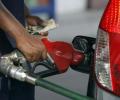
Petrol and diesel prices, which have been on a freeze for the past four months in view of assembly elections in states like Uttar Pradesh, need to be increased by over Rs 12 per litre by March 16 for fuel retailers to break even. International crude oil prices shot above $120 a barrel for the first time in nine years on Thursday before retreating a little to $111 on Friday, but the gulf between cost and retail rates has only widened. With international oil prices - on which domestic fuel retails are directly benchmarked - spiking in the last two months, state-owned fuel retailers "need a massive price hike of Rs 12.1 per litre on or before March 16, 2022, just to breakeven and a price hike of Rs 15.1 is required" after including margins for oil firms, ICICI Securities said in a report.

ONGC's January-March quarter results for the 2022-23 financial year (Q4FY23) indicated changes in the trends of the energy cycle as well as the impact of policy change in gas-pricing. The public sector oil and gas major reported standalone Ebitda (earnings before interest, tax, depreciation and amortisation) at Rs 16,340 crore, down 12 per cent year-on-year (YoY), and down 20 per cent quarter-on-quarter (QoQ). There was a net loss of Rs 250 crore due to exceptional items of Rs 9,240 crore for provisions related to the ongoing dispute regarding the applicability of service tax and goods and services tax on Royalty.

Gold as well as crude oil prices surged, with the latter even crossing the $103 per barrel mark. The domestic stock market opened deep in the negative territory, tumbling over 1,700 points and eroding investors' wealth by more than Rs 8 lakh crore in less than an hour of start of trade on Thursday.

Bajaj Finserv was the top loser in the Sensex pack, shedding 4.57 per cent, followed by Infosys, TCS, Sun Pharma, HCL Tech, HUL, Dr Reddy's, HDFC and Reliance Industries. NSE Nifty plunged 181.40 points to 17,757.00.

Equity markets maintained their winning momentum for the second day in a row on Thursday, with the Sensex surging over 874 points, propelled by index majors Reliance Industries, Infosys and HDFC twins amid a mixed trend in global markets. The BSE benchmark Sensex zoomed 874.18 points or 1.53 per cent to finish at 57,911.68. During the day, it jumped 954.03 points or 1.67 per cent to 57,991.53. The NSE Nifty rallied 256.05 points or 1.49 per cent to 17,392.60.

The Organization of the Petroleum Exporting Countries (Opec) and its partners, such as Russia, collectively termed Opec+, have decided to cut crude oil production by 100,000 barrels per day (bpd) from October onwards, at a meeting on Monday. In a step that may increase prices in India, the group has decided to reduce output quotas for October, after a fall in global oil demand outlook. The cut in output is equal to 0.1 per cent of global supply.

Tea planters and exporters are "extremely worried" over the possible impact on their shipments to Russia, India's second largest buyer of tea, in the wake of the Russia-Ukraine crisis. Western sanctions and disruption of payments in dollars as well as transhipments to Russia are expected as a fall-out of Russia launching an attack on Ukraine on Thursday. "The Russian market for Indian tea is extremely important as there are payment issues for shipments to Iran, another vital tea export destination. "Around 18 per cent of India's tea shipments go to Russia," India Tea Association chairperson Nayantara Palchoudhuri told PTI.

For the first time, the rupee declined to the low level of 80 against the US dollar in intra-day spot trading on Monday before ending the session 16 paise lower at 79.98 amid a surge in crude oil prices and unrelenting foreign fund outflows. At the interbank forex market, the local unit opened at 79.76 against the greenback but lost ground to touch the psychological low mark of 80 against the American currency. The local unit clawed back some lost ground and closed at 79.98, registering a fall of 16 paise over its previous close.

Jet fuel prices on Wednesday were hiked by over 18 per cent -- the steepest ever increase -- to all-time high levels after international oil price surged to a multi-year high.

Petrol and diesel prices are likely to be hiked this week as oil companies prepare to pare losses accumulated from keeping rates steady for over four months in the run-up to assembly elections in five states, including UP, despite international oil prices jumping to a 13-year high of $140 per barrel. West Texas Intermediate crude futures, the US oil benchmark, rose to $130.50 per barrel on Sunday evening, its highest since July 2008, before retreating. The international benchmark, Brent crude, hit a high of $139.13 at one point overnight, also its highest since July 2008.

Benchmark indices started the trade on a weak note on Wednesday with the Sensex falling 564.77 points, following feeble global market trends and persistent foreign capital outflows. The 30-share BSE Sensex was trading 564.77 points lower at 52,612.68. The NSE Nifty dipped 162.4 points to 15,687.80. Among the Sensex pack, IndusInd Bank, Hindustan Unilever, Bajaj Finserv, Titan, Kotak Mahindra Bank and Bajaj Finance were the major laggards in early trade.

Benchmark indices continued their downtrend on Monday, with the Sensex falling 84.88 points, tracking selling in index majors Infosys and Reliance Industries along with weak global equities. The 30-share BSE benchmark went lower by 84.88 points or 0.15 per cent to settle at 56,975.99 after recovering some lost ground during the fag-end of trade. During the day, it tanked 648.25 points or 1.13 per cent to 56,412.62. The NSE Nifty declined 33.45 points or 0.20 per cent to close at 17,069.10.

Investors' wealth tumbled Rs 86,741.74 crore on Wednesday, mirroring weakness in the global equity markets amid escalating tensions between Russia and Ukraine. The BSE benchmark Sensex slumped 1,227.18 points to 55,020.10 during the day in line with a global selloff. It finally settled at 55,468.90, lower by 778.38 points or 1.38 per cent. Surging crude prices and foreign capital outflows also weighed on investor sentiment.

On the Sensex chart, all 30 shares closed with gains -- with Bajaj Finance, SBI, Bajaj FinServ, L&T and Titan rising as much as 5.13 per cent. The BSE gauge Sensex zoomed past the 58,000-mark by rebounding over 1,700 points and the Nifty recaptured the 17,000-level on Tuesday after a massive plunge in the previous session. The 30-share Sensex surged 1,736.21 points or 3.08 per cent to end at 58,142.05 - recouping the losses suffered on Monday. Likewise, the NSE Nifty soared 509.65 points or 3.03 per cent to settle at 17,352.45.
Petrol and diesel prices were on Tuesday hiked by 80 paise a litre while domestic cooking gas prices were increased by Rs 50 per cylinder, ending an over four-and-half month election-related hiatus in rate revision, sources said. Petrol in Delhi will now cost Rs 96.21 per litre as against Rs 95.41 previously while diesel has gone up from Rs 86.67 per litre to Rs 87.47. Simultaneously, the price of a non-subsidised LPG cylinder has been increased to Rs 949.50 for each 14.2-kg bottle in the national capital.

'China's economy continues to slow and the US Fed may still hike rates before the end of the year.'
After turning net buyers last month, foreign investors have become aggressive shoppers of Indian equities and have invested Rs 22,452 crore in the first two weeks of August amid softening inflation concerns. This was way higher than a net investment of nearly Rs 5,000 crore by Foreign Portfolio Investors (FPIs) in the entire month of July, data with depositories showed. FPIs had turned net buyers for the first time in July, after nine straight months of massive net outflows, which started in October last year.

Equity indices failed to hold on to their gains in see-saw trade on Tuesday, ending in the red for the third straight session despite a tentative recovery in global equities. The rupee too bounced back from historic lows, but the overall sentiment remained risk-averse amid concerns over economic recovery in a high interest rate scenario. The 30-share BSE Sensex had a choppy start but gained momentum in mid-session trade. However, it succumbed to selling pressure towards the fag end to close 105.82 points or 0.19 per cent lower at 54,364.85. On similar lines, the broader NSE Nifty declined 61.80 points or 0.38 per cent to finish at 16,240.05.
Paring its early gains, benchmark BSE Sensex fell by 304 points on Wednesday as investors booked profit after recent gains amid concerns over inflation and supply constraints. Despite a firm start, the 30-share BSE barometer declined by 304.48 points or 0.53 per cent to settle at 57,684.82. During the day, it tanked 420.71 points or 0.72 per cent to 57,568.59.
Investors' wealth on Tuesday jumped by over Rs 2.51 lakh crore, in tandem with a sharp recovery in equities after four days of heavy declines. The 30-share BSE Sensex opened on a weak note and tumbled 581.93 points or 1.10 per cent to 52,260.82 during the day amid firming oil prices and relentless selling by foreign institutional investors. Amid bouts of volatility, the benchmark touched a high of 53,484.26 and a low of 52,260.82 during the trade. It finally settled at 53,424.09, higher by 581.34 points or 1.10 per cent.

Oil imports are a third of India's total import bill.

Changes in global oil and gas rates matter more to India's economy than other major economies because the country imports around 87 per cent of its oil, half of its gas in the form of LNG, and over 60 per cent of its LPG.

While Vedanta was the biggest gainer in the Sensex pack rallying 4.67 per cent, others included Tata Steel, ONGC, NTPC, Yes Bank, Infosys, Sun Pharma, Bharti Airtel, SBI, Bajaj Finance, L&T and RIL, rising up to 4.13 per cent.

CNG price in the national capital and adjoining cities on Tuesday was hiked by Rs 0.50 per kg, while an imminent increase in petrol and diesel price has been put on wait-and-watch mode for more clarity on global oil prices. CNG price in NCT of Delhi has been increased to Rs 57.51 per kg from Rs 56.51, according to the information posted on the website of Indraprastha Gas Ltd - the firm which retails CNG and piped cooking gas in the national capital. Following the firming up of international gas rates, IGL has been raising CNG rates by up to 50 paise (Rs 0.50) per kg periodically. Prices have gone up by about Rs 4 per kg this year alone.

Benchmark indices failed to hold on to early gains and closed in the red for the seventh straight session on Thursday, with participants remaining in wait-and-watch mode ahead of the RBI's interest rate decision. Unabated selling by foreign funds added to the pressure, though a modest recovery in the rupee cushioned the fall, traders said. After rallying in early trade, the 30-share BSE Sensex came under selling pressure in the afternoon session and closed 188.32 points or 0.33 per cent lower at 56,409.96.

Ultratech Cement was the top gainer in the Sensex pack, surging nearly 3 per cent, followed by M&M, Maruti, Tata Steel, TCS, L&T, SBI and HUL. NSE Nifty advanced 52.35 points to 18,308.10.
There is positive correlation between crude oil prices and Indian equities and investors can expect more upside after the recent rally in Brent crude price.
Benchmark equity indices Sensex and Nifty on Tuesday spurted by over 2.5 per cent to log their best single-day gains in three months, propelled by heavy buying in metal, energy and banking stocks amid a global rally in stocks. The 30-share BSE benchmark zoomed 1,344.63 points or 2.54 per cent to settle at 54,318.47 points with all of its constituents closing with gains. During the day, it jumped 1,425.58 points or 2.69 per cent to 54,399.42. The broader NSE Nifty rallied 417 points or 2.63 per cent to finish at 16,259.30 points.

Equity benchmark Sensex pared its early losses to close higher by 231 points on Monday, helped by buying in index heavyweight Reliance Industries and ICICI Bank amid positive global trends. After falling 537.11 points to a low of 56,825.09 in morning trade, the 30-share BSE barometer staged a recovery in afternoon trade and climbed 231.29 points or 0.40 per cent to settle at 57,593.49. As many as 20 Sensex stocks closed with gains while 10 declined. The broader NSE Nifty recovered 69 points or 0.40 per cent to settle at 17,222 with 29 of its constituents ending in green.

The government on Wednesday scrapped a week-old tax on the export of petrol and cut windfall taxes on overseas shipment of diesel and ATF as well as the one imposed on domestically produced crude oil after global oil prices fell. While the Rs 6 a litre export duty on petrol was scrapped, the tax on the export of diesel and jet fuel (ATF) was cut by Rs 2 per litre each to Rs 11 and Rs 4 respectively, government notifications showed. The tax on domestically produced crude was also cut to Rs 17,000 per tonne from Rs 23,250, a move that will benefit producers like ONGC and Vedanta Ltd.
Equity indices made an emphatic comeback on Friday after falling for seven straight sessions after the RBI hiked interest rates by 50 basis points on expected lines and projected inflation coming under control from January next year. A strong recovery in the rupee added to the momentum, traders said. Overcoming a wobbly start, the 30-share BSE Sensex soared 1,016.96 points or 1.80 per cent to settle at 57,426.92. During the day, it rallied 1,312.67 points or 2.32 per cent to 57,722.63.

The rupee plunged 90 paise to close at an all-time low of 80.86 (provisional) against the US dollar on Thursday after the US Federal Reserve's interest rate hike and its hawkish stance weighed on investor sentiments. Forex traders said the US Fed's rate hike and escalation of geopolitical risk in Ukraine sapped risk appetite. Moreover, the strength of the American currency in the overseas market, a muted trend in domestic equities, risk-off mood and firm crude oil prices weighed on the rupee.

Kotak Bank was the top loser in the Sensex pack, falling over 4 per cent, followed by IndusInd Bank, Axis Bank, ONGC, HDFC Bank, Bajaj Auto and Reliance Industries.

IndusInd Bank was the top laggard in the Sensex pack, falling over 5 per cent, followed by HDFC, Axis Bank, PowerGrid, SBI, Bajaj Finserv and Bharti Airtel.
Foreign portfolio investor (FPI) flows into India may remain tepid in 2022, said a recent note by Goldman Sachs, who now peg the foreign portfolio investment into India at $5 billion in 2022, down from their earlier forecast of $30 billion with risks skewed to the downside. "There has been $15 billion of equity outflows YTD in India already, and the IPO of the largest insurance company has been pushed out. "Additionally, with no mention of India's inclusion in global bond indices in the Union Budget, there are risks to our already conservative base case assumption of an announcement of India's likely inclusion into the GBI-EM Global Diversified Bond Index in Q4-2022," wrote Andrew Tilton, Goldman Sachs' chief Asia-Pacific economist in a co-authored report with Santanu Sengupta and Suraj Kumar.
